(VIDEO) Beneath the Waves: Trump’s Strategic Message to Russia—Ohio-Class Submarines on the Move
President Donald Trump may have deployed the U.S. Navy’s most formidable nuclear weapons platform—the Ohio-class submarine—in response to Russia’s veiled threat, sending a chilling message of strategic resolve across the globe.

(DEFENCE SECURITY ASIA) — In a move that sent geopolitical shockwaves rippling across strategic capitals, U.S. President Donald Trump declared he had ordered the deployment of two nuclear submarines to undisclosed “appropriate regions” in response to what he branded as reckless and provocative statements from former Russian President Dmitry Medvedev.
While the announcement stopped short of identifying the class of submarines involved, defence analysts and naval experts strongly believe Trump was referencing the Ohio-class ballistic missile submarines (SSBNs)—the most survivable and lethal component of the United States’ nuclear triad.
This bold act of maritime strategic signalling came after Medvedev, now a key figure in the Kremlin’s Security Council, warned Trump to “remember” Russia’s inherited Soviet-era nuclear capabilities, after the former U.S. President told him to “watch his words.”
“Based on the highly provocative statements of the Former President of Russia, Dmitry Medvedev … I have ordered two Nuclear Submarines to be positioned in the appropriate regions, just in case these foolish and inflammatory statements are more than just that,” Trump stated on social media.
“Words are very important, and can often lead to unintended consequences. I hope this will not be one of those instances.”
Though widely dismissed by some as rhetorical theatre, the decision to invoke the specter of nuclear-powered submarines reveals a sophisticated awareness of the U.S. Navy’s most formidable deterrence asset: the Ohio-class SSBN, designed for precisely this kind of geopolitical brinkmanship.
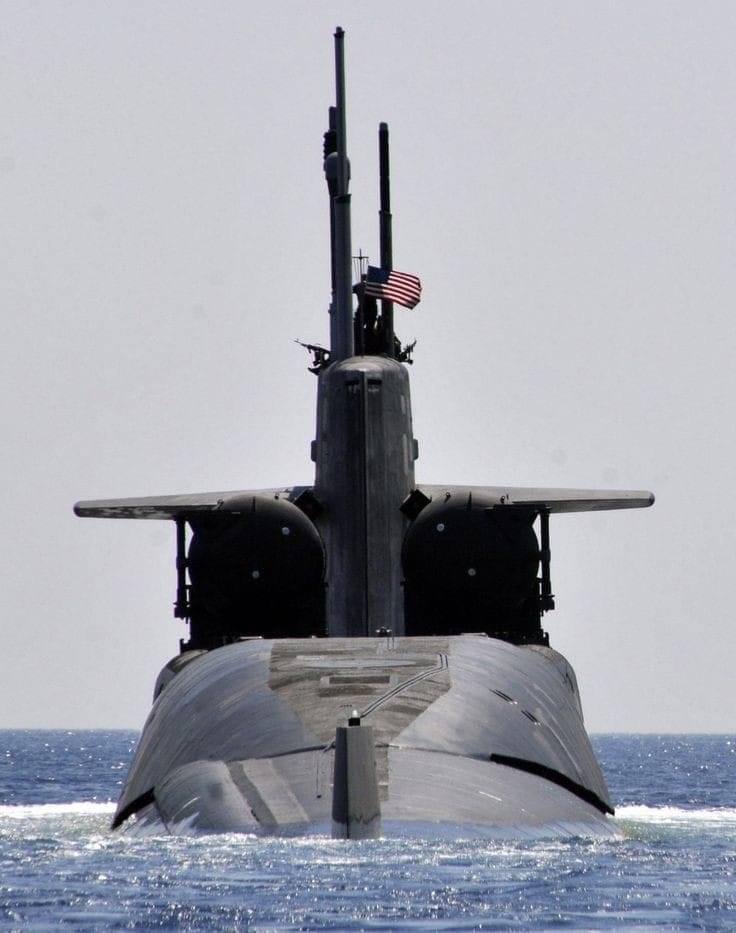
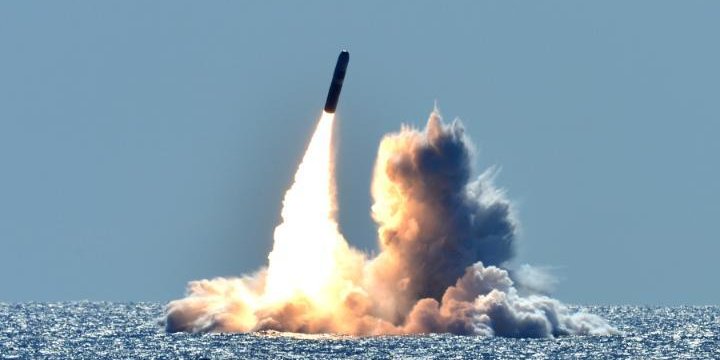
With 14 Ohio-class ballistic missile submarines in active service, each carrying up to 24 Trident II D5 submarine-launched ballistic missiles (SLBMs), the United States retains the capability to strike targets across continents with unmatched speed and force.
Each Trident II D5 missile can be armed with multiple independently targetable reentry vehicles (MIRVs), enabling a single submarine to deliver dozens of thermonuclear warheads to separate targets up to 4,600 miles (7,400 kilometers) away.
That means a single Ohio-class submarine carries enough firepower to decimate an entire nation—making it not just a weapon, but a warning.
What makes these vessels even more terrifying is their stealth.
At 170 meters (560 feet) long and displacing over 18,000 tons submerged, the Ohio-class submarines are massive by naval standards.
Yet thanks to advanced quieting technologies—including sound-isolated machinery, anechoic tile coatings, and low-noise propulsion—they are virtually undetectable even by modern anti-submarine warfare (ASW) assets.
This allows the U.S. Navy to maintain a constant, undetectable presence in international waters, ready to retaliate if America’s strategic interests are attacked.
(VIDEO: The launching of 24 Trident II D5 submarine-launched ballistic missiles)
According to the Nuclear Threat Initiative, the U.S. generally maintains eight to ten Ohio-class SSBNs on continuous deterrent patrol at any given time—positioned across the Atlantic, Pacific, and potentially Indian Oceans.
Whether Trump’s directive involved altering existing patrol routes, surfacing submarines for visible deterrence, or increasing regional presence remains classified—but the political message is unambiguous.
Hans Kristensen, Director of the Nuclear Information Project at the Federation of American Scientists, noted:
“The subs are always there all the time and don’t need to be moved into position. He grants Medvedev a response to these crazy statements.”
Beyond the strategic SSBN fleet, the U.S. Navy also operates four converted Ohio-class submarines reconfigured as guided-missile submarines (SSGNs): USS Ohio, USS Michigan, USS Florida, and USS Georgia.
These platforms no longer carry Trident SLBMs but are instead outfitted with 154 Tomahawk Land Attack Missiles (TLAMs)—providing unmatched conventional strike capability from stealthy, submerged platforms.
They also serve as special operations force (SOF) motherships, capable of transporting up to 66 Navy SEALs, submersibles, and underwater delivery vehicles, thanks to dry-deck shelters and reconfigured missile tubes.
With a range of 1,600 km, the Tomahawk missile can strike high-value targets with pinpoint accuracy, making the SSGNs the ideal choice for escalatory, non-nuclear force projection in contested zones.
The dual capability of the Ohio-class family—nuclear and conventional—makes it the perfect platform for signalling varying levels of strategic intent, from deterrence to direct action.
That flexibility may explain why Trump chose to highlight their repositioning, knowing full well their capabilities and how adversaries interpret them.
Since the Cold War, Ohio-class submarines have served as the bedrock of U.S. second-strike assurance, with patrols lasting up to three months submerged and missions often shrouded in secrecy.
They are designed to survive a nuclear first strike and retaliate with overwhelming force—ensuring mutually assured destruction (MAD) remains a credible deterrent in U.S. strategic doctrine.
Medvedev’s remarks, by invoking Soviet nuclear doctrine, effectively reawakened Cold War specters of hair-trigger posturing between nuclear-armed superpowers.
Trump’s immediate response—whether symbolic or actual—employs the same lexicon of strategic ambiguity.
In this age of declining arms control regimes, eroding international norms, and rising great power rivalry, the Ohio-class SSBN stands as both weapon and warning.
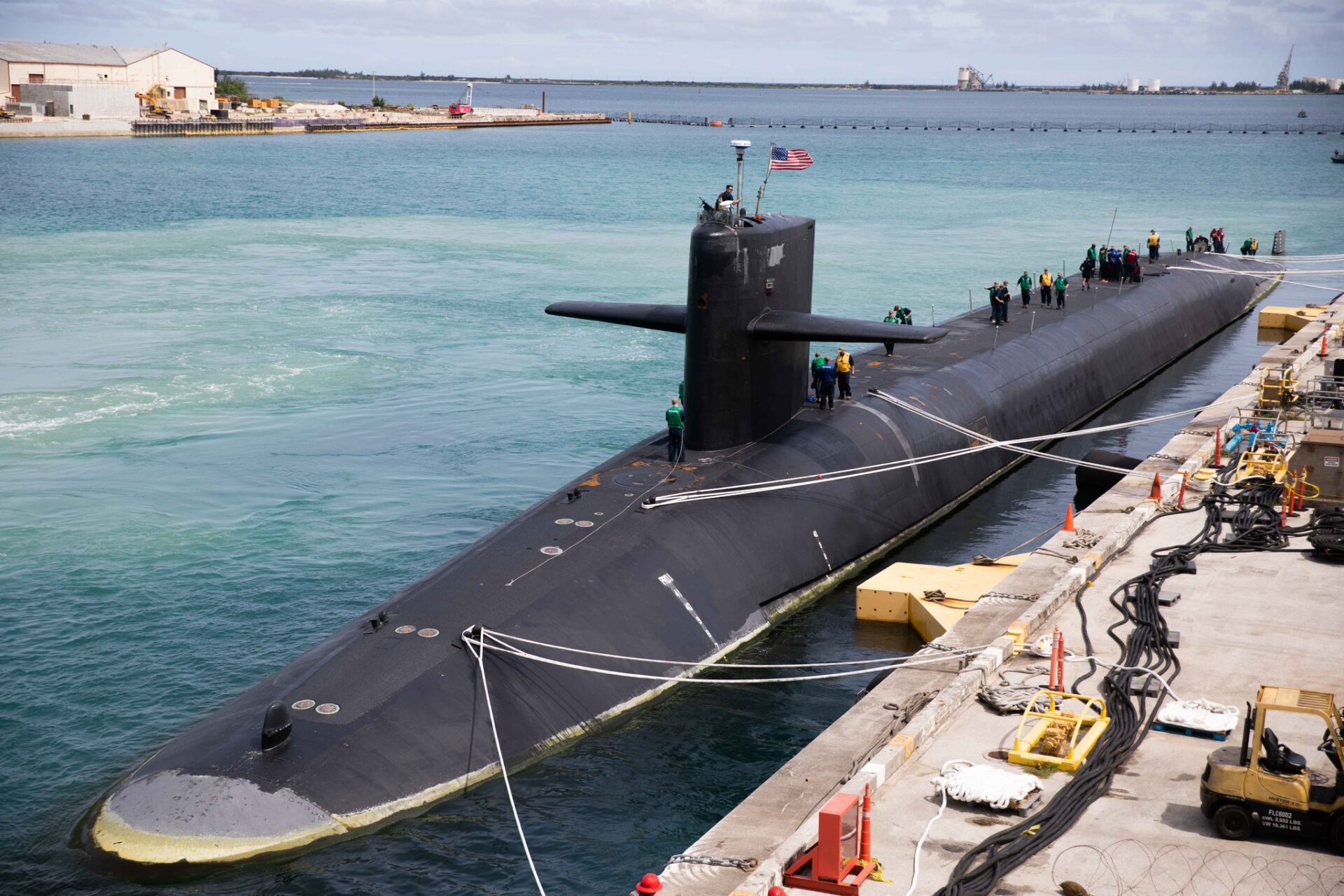
It is the invisible sword of U.S. policy, ready to strike without notice and designed to disappear before it’s ever seen.
As the U.S. begins to phase out the Ohio-class in the 2030s in favor of the Columbia-class SSBN, their current role remains more vital than ever.
Each one costs approximately $2 billion USD (about RM9.4 billion) to build, and their operational lifetime has been extended well beyond their original 30-year design to ensure uninterrupted deterrence.
In the Indo-Pacific, Europe, and the Arctic—regions of growing friction—Ohio-class submarines remain deployed and mission-ready, their exact positions known only to a few at the Pentagon and the White House.
Whether Trump’s revelation was a shift in posture or merely a public reiteration of a constant strategic reality, the geopolitical implications are clear.
To those who would test U.S. resolve—whether in Moscow, Beijing, or Tehran—the silent giants beneath the ocean waves offer a stark reminder: you will not strike first without consequence.
And it is the Ohio-class submarine that delivers that message, without a whisper, without warning.
Trident II D5: The Apocalyptic Spear Beneath the Seas That Can End Nations in Minutes”
The Trident II D5 submarine-launched ballistic missile (SLBM) stands as one of the most terrifying instruments of nuclear deterrence ever created—an intercontinental missile capable of obliterating multiple cities in under half an hour, launched silently from the depths of the ocean.
Developed by Lockheed Martin and operational since 1990, the Trident II D5 missile is the backbone of the United States and United Kingdom’s sea-based nuclear triad, deployed aboard U.S. Navy Ohio-class and UK Royal Navy Vanguard-class ballistic missile submarines.
Each Trident II D5 measures approximately 13 meters long and weighs around 59,000 kilograms, with a range exceeding 12,000 kilometers (7,500 miles), making it capable of striking virtually any target on Earth from undisclosed underwater positions.
This three-stage solid-fueled missile can carry up to 14 independently targetable reentry vehicles (MIRVs), each armed with a nuclear warhead ranging from 100 kilotons to 475 kilotons, enabling a single missile to destroy multiple targets with devastating precision.
Guided by an advanced inertial navigation system with celestial and GPS updates, the D5 boasts a circular error probable (CEP) of less than 90 meters, granting it extraordinary accuracy for a strategic nuclear weapon.
The lethality of the Trident II is amplified by its stealth—deployed from undetectable platforms submerged thousands of meters below the ocean’s surface, it provides guaranteed second-strike capability, ensuring the doctrine of Mutually Assured Destruction (MAD) remains credible.
The missile’s continuous upgrades, including life-extension programs and improved guidance systems, ensure it remains a viable deterrent deep into the 2040s and beyond.
In an era of resurging great power competition, especially with the modernization of China’s and Russia’s nuclear arsenals, the Trident II D5 remains a cornerstone of Western strategic stability.
Its mere presence beneath the waves acts as an invisible sword of Damocles, silently ensuring that no adversary can strike first without triggering an overwhelming and annihilating retaliation.
More than just a weapon, the Trident II D5 is a strategic message—one that speaks not through words, but through the unstoppable arc of nuclear fire arcing silently from the deep sea to the heart of a continent.
As long as these missiles prowl the oceans aboard submarines cloaked in silence, global war planners know one truth: peace, for now, floats on a submerged and silent threat that could end civilization in minutes.